
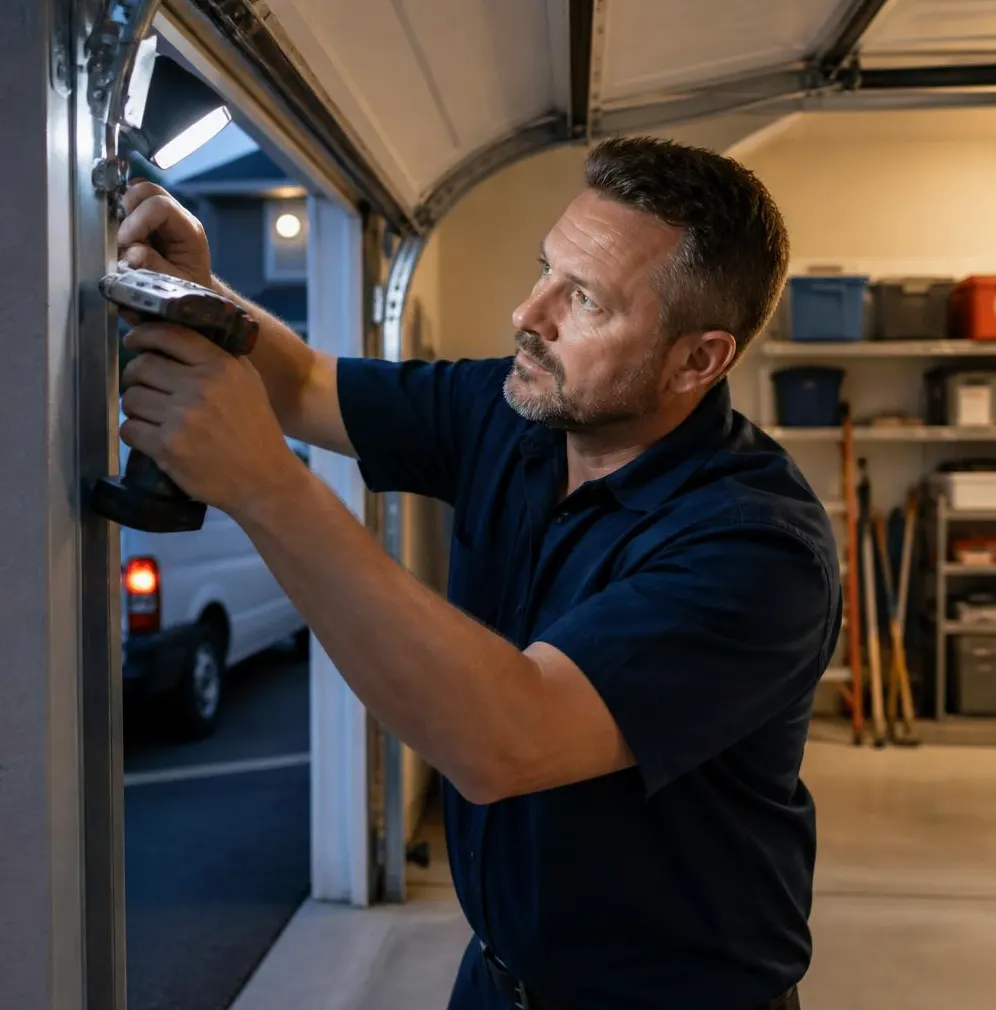
What We Usually Find on a Fall Service Call
Most of the calls we get this time of year start the same way: a door that worked fine all summer suddenly feels heavier, hesitates halfway up, or makes a new noise when the temperature drops overnight. Nine times out of ten it's not one big problem — it's a handful of small things that cold weather exposes. A spring that was already a little worn, a roller that's been dry for a year, weatherstripping that cracked and nobody noticed until the first cold snap. Western New York doesn't ease into winter. We go from humid, buggy evenings to frost on the windshield in a matter of weeks, and garage doors feel that transition before almost anything else in the house.
Cold Makes Springs Work Harder
Steel contracts in the cold, and that changes the tension on your torsion or extension springs. A spring that was marginal in August can snap in January, usually on the coldest morning of the week when you're already running late. If your door has felt heavier than usual when you lift it manually, or if the opener strains and makes a louder motor sound than normal, that's worth checking before winter, not after a spring lets go. Springs are rated for a certain number of cycles, and most residential setups need replacement every several years depending on use — if yours hasn't been looked at in a while, fall is the right time to find out where it stands rather than finding out the hard way during a January deep freeze.
Weatherstripping and Seals Take a Beating From Freeze-Thaw
The rubber seal along the bottom of the door and the seals along the sides do more work here than in milder climates. Our freeze-thaw cycles — days that creep above freezing followed by nights well below it — make rubber brittle faster than steady cold would. Cracked or flattened weatherstripping lets in drafts, meltwater, and road salt spray, all of which end up pooling on your garage floor or seeping toward stored items. Check the bottom seal for flat spots, tears, or gaps where it no longer touches the floor evenly. Replacement seal kits are inexpensive and a reasonable DIY project if you're comfortable with it; if the track for the seal is bent or the door itself isn't sitting level, that's a sign of a bigger alignment issue.
Tracks, Rollers, and Hinges Need Attention Before the Salt Starts Flying
Once the plows and salt trucks are out, that grit gets tracked into garages on tires and boots, and it works its way into rollers and hinges just like it does on a car's undercarriage. Grime mixed with old lubricant turns gritty and actually accelerates wear instead of preventing it. Before winter sets in:
- Wipe down the tracks with a damp cloth to clear summer dust and cobwebs
- Check that tracks are still straight and bolted securely — a track knocked slightly out of alignment over the summer gets worse once ice adds extra resistance
- Lubricate rollers, hinges, and the torsion spring with a garage-door-specific lubricant, not household oil, which attracts grit
- Tighten any visibly loose hardware; vibration from daily use loosens bolts over months
If your door has nylon rollers, cold makes them stiffer and noisier for the first few openings on a frigid morning — that's normal. Grinding or a roller that looks chipped or flat-sided is not, and it's a sign of wear that ice and cold will make worse.
Don't Forget the Opener
Garage door openers rely on sensors and a motor that both have to perform in temperatures they weren't necessarily designed for. Confirm the safety sensors near the floor are clean and properly aligned — a sensor coated in road salt dust or knocked slightly out of position is a common culprit behind a door that reverses for no clear reason. If you rely on your garage as a secondary entrance during storms, consider whether your opener has battery backup. Nor'easters in this region regularly bring power outages along with heavy snow, and a battery backup means you're not stuck trying to manually release and lift a heavy door in a blizzard.
Older Doors Need Extra Patience
A lot of the housing stock in this area includes original garage doors that are decades old. These doors often lack modern insulation and may have hardware that's harder to source. That's not necessarily a reason to replace — many older doors are solidly built and can be maintained for years longer — but it does mean panels, tracks, and springs on these units deserve a closer look each fall, since replacement parts sometimes take longer to get than they would for a newer standard-size door.
When to Call Brockport Garage Door
If your door is hesitating, making a new noise, or the weatherstripping is too far gone for a basic kit to fix, that's when it's worth having someone take a real look before the snow flies. We handle garage door maintenance tune-ups that cover spring tension, track alignment, lubrication, and hardware checks in one visit, so you're not guessing which part needs attention. If a spring has already failed or looks close to it, our spring replacement service gets that handled safely — this isn't a job to attempt yourself, since torsion springs are under serious tension. We also handle cable and track repair and opener work if the issue turns out to be electrical rather than mechanical.
If your garage door is giving you any reason to pause before winter really sets in, call Brockport Garage Door. We serve Brockport, Clarkson, Sweden, Hamlin, Spencerport, Hilton, Bergen, and Holley, and we'd rather get you squared away now than have you stuck with a stuck door in February.